Yard Drainage Solutions in St. Charles, IL: How to Fix a Soggy Lawn for Good
If your lawn squishes when you walk, you’re not just dealing with “a wet spot.” You’re dealing with water that has nowhere to go.
In St. Charles and the surrounding Fox Valley area, soggy yards are common — especially after spring rains or heavy storms. And once water starts pooling in the wrong place, it can lead to muddy patches, thinning grass, mosquitoes, and even long-term issues near patios and hardscapes.
At Lawn Boyz Landscaping, we approach drainage the same way we approach any outdoor project: diagnose the cause, design the fix, and build it to last. This guide breaks down the most common causes of poor drainage and the solutions that actually work in real Chicagoland yards.
If you want to see the kind of outdoor work we build around drainage solutions, visit our Services page.
Step one: figure out where the water is coming from (before you dig)
Most soggy yards come from one (or more) of these issues:
-
Roof runoff dumping water too close to the house
-
A low spot that collects water like a bowl
-
Compacted soil that can’t absorb water fast enough
-
A yard that slopes the wrong direction
-
Hardscapes (patios/walkways) that push water into the lawn
The fastest way to diagnose the problem is to watch what happens during a medium rain or right after it stops. Water always takes the easiest path — and if that path leads into your lawn, it’ll keep happening until you redirect it.
Quick drainage checklist (takes 5 minutes)
-
Downspouts and sump discharge: If water dumps near the foundation, it often travels along the house and resurfaces as a soggy strip.
-
Slope near the home: If soil pitches toward the foundation, water will sit where it shouldn’t.
-
Low areas: Look for spots where the grass is thin, the soil is darker, or footprints fill with water.
-
Soak test: Dig a small hole 8–12 inches deep, fill it with water, and see how fast it drains. If it drops slowly, you need a plan that moves water sideways, not one that waits for it to soak in.
If your drainage issue is affecting patios, retaining walls, or larger outdoor features, it’s usually smarter to plan drainage as part of a bigger landscape solution instead of patching one area at a time. That’s where Landscape Design & Install makes a big difference.
The most common drainage mistakes homeowners make
A lot of DIY drainage attempts fail for the same reasons:
1) Installing a drain without an outlet
A French drain isn’t a magic sponge. It’s a collection system that needs a safe discharge point. Without one, it becomes a rock-filled bathtub underground.
2) Trying to “fix” the yard without fixing runoff
If your downspouts dump water right next to the house, your yard will keep losing the battle.
3) Ignoring grading because it “looks fine”
Drainage problems are often caused by tiny slope issues you can’t see until it rains.
4) Building patios or walkways without a water plan
Hardscapes shed water fast. If runoff isn’t accounted for, it ends up in your lawn, along your foundation, or behind your retaining wall.
If you’re considering any patio upgrades, drainage should be part of the plan from day one. Learn more here:
Drainage solutions that actually work in St. Charles yards
The best drainage fixes usually aren’t one big project. They’re a few smart moves that work together.
Option 1: Fix the “free water” first (downspout extensions)
If your gutters dump water near the foundation, start here. Redirecting roof runoff is one of the cheapest fixes and it can make an immediate difference.
This is especially important if you’re seeing:
-
soggy soil along the house
-
water collecting near basement windows
-
muddy areas that line up with downspout locations
Option 2: Regrading to eliminate low spots
Regrading means reshaping the top few inches of soil so water flows away from problem areas. In many cases, you don’t need a total yard rebuild — you just need to remove the “bowl” that collects water.
This is one of the most effective fixes when:
-
puddles form in the same spot every time
-
the yard feels uneven underfoot
-
grass keeps dying in one area
If you want to see how we approach full-property solutions, check out our Our Process.
Option 3: Swales (a natural drainage channel that looks like lawn)
A swale is a shallow, wide dip that guides water like a slow-moving creek. When built correctly, it blends into the yard and moves water away without looking like a trench.
Swales work best for:
-
yards with minor slope issues
-
water that needs direction, not underground collection
-
runoff moving from one side of the yard to another
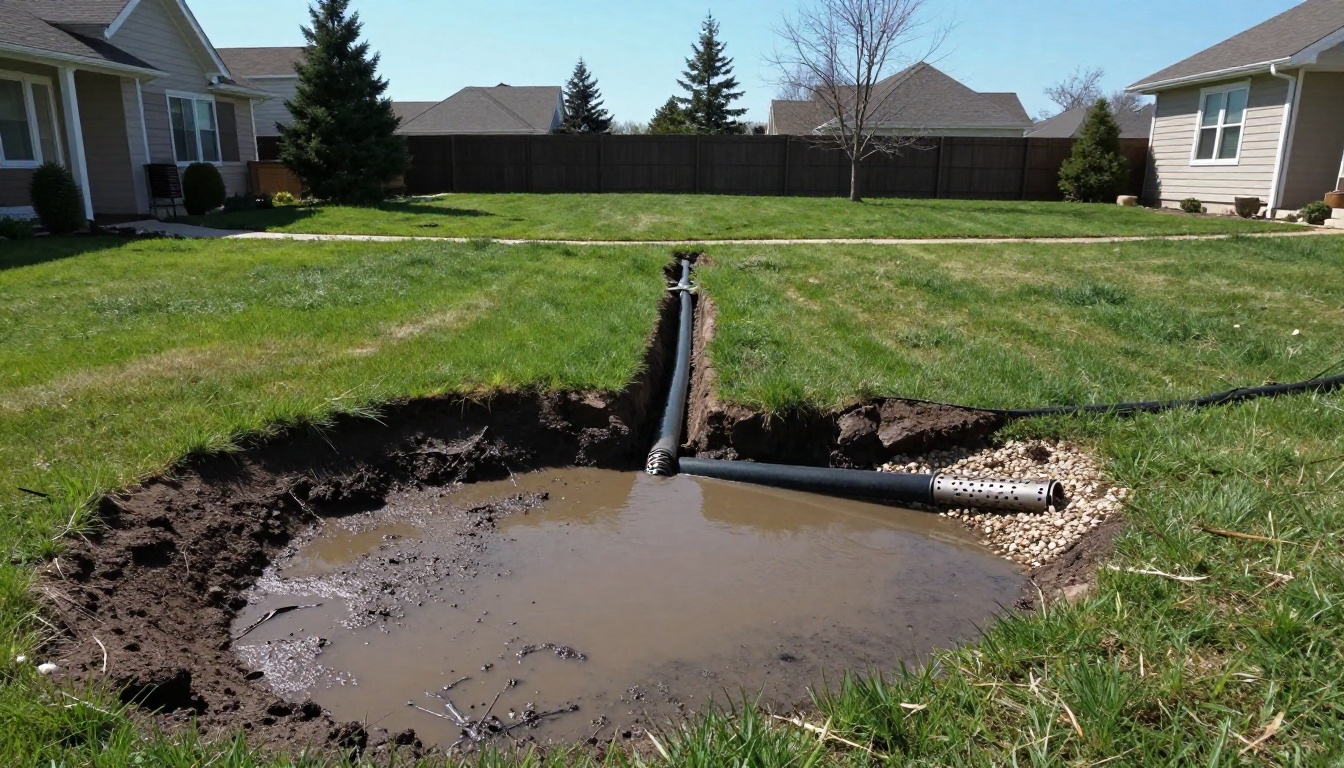
Option 4: French drains (for trapped groundwater and heavy soils)
French drains are a great solution when your yard stays wet because water is trapped in the soil — not just pooling on top.
A proper French drain system includes:
-
a planned discharge point
-
correct slope
-
clean gravel
-
a perforated pipe
-
fabric separation to reduce clogging
-
cleanouts for maintenance
French drains are often the right call when:
-
your yard stays soft for days after rain
-
you have heavy clay soil that drains slowly
-
you’re getting standing water in a low area that won’t dry out
Option 5: Drainage planning for patios, walkways, and outdoor living
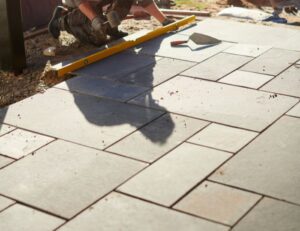
Hardscapes can either help drainage or make it worse. The base, pitch, and runoff direction matter.
If you’re building a new patio, walkway, or outdoor living area, drainage should be planned before anything is installed.
These projects often pair with drainage upgrades:
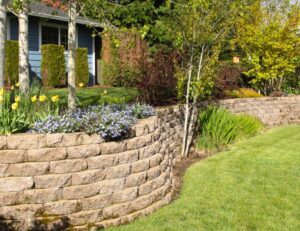
Retaining walls especially need proper water handling behind them — drainage isn’t optional if you want the wall to last.
Best drainage plan by problem type (quick guide)
Here’s a practical way to choose your starting point:
Problem you see → Best first fix → When to add more
-
Water sitting near the foundation → downspout extensions + regrading → add drainage if it still seeps back
-
Puddles in one low area → regrade + swale → add drainage if the soil stays saturated
-
Yard stays soft for days → swale + outlet plan → add French drain if soil won’t infiltrate
-
Wet strip along patio/walkway → regrade edges + runoff plan → add subsurface drainage if base stays wet
-
Water building up near a wall → drainage planning + grading → add wall drainage as needed
If you want a professional set of eyes on it, Lawn Boyz Landscaping offers full outdoor solutions for the area:
Hardscape Landscaper in St. Charles
When soggy yards turn into hardscape problems
Drainage isn’t just a lawn issue. Over time, unmanaged water can affect:
-
patio base stability
-
walkway settling
-
retaining wall pressure
-
erosion around landscape beds
-
pooling near outdoor features
That’s why we recommend thinking of drainage as part of the whole yard system — not just one wet patch.
If you’re planning a full backyard transformation, you may also want:
Backyard Landscape Design in St. Charles
Want to see examples of completed work? Browse the Gallery.
Serving St. Charles and the surrounding area
Lawn Boyz Landscaping works throughout the Fox Valley and surrounding Chicagoland area. If you’re planning a drainage fix tied to patios, retaining walls, or landscape design, we can help you build a solution that fits your property and prevents repeat problems.
To explore service coverage, visit our Service Areas page.
Conclusion: the goal isn’t “less mud” — it’s control over where water goes
A soggy yard isn’t mysterious. It’s water following gravity and getting trapped.
Start with the easy wins (roof runoff and grading), then add swales or French drains only where they earn their keep. The long-term goal is simple: move water away from problem areas and give it a safe place to go.
If you’re ready to fix drainage the right way in St. Charles, you can reach our team here:
Contact Lawn Boyz Landscaping
Before choosing a contractor, you can also see what customers say:
Read Reviews
TL;DR / Key Takeaways
-
Most soggy yards in St. Charles come from runoff, low spots, compacted soil, or poor grading
-
Start by identifying the water source before digging anything
-
Downspout extensions and small grading fixes often solve the biggest problems
-
French drains work best when there’s a real outlet plan (otherwise they fail)
-
Patios and retaining walls should always be planned with drainage in mind
-
The goal is simple: control where water goes so your lawn and hardscapes stay stable